In today's rapidly evolving business landscape, the ability to harness data and transform it into actionable insights is more crucial than ever. Business analytics has emerged as a pivotal tool, enabling companies to make informed decisions and stay ahead of the competition. But what exactly is business analytics, and how can it drive success?
Understanding Business Analytics
At its core, business analytics refers to the practices and techniques used to analyze past business performance to gain insight and inform future business planning. It's a blend of data management, statistical analysis, and operational research. While often used interchangeably with terms like business intelligence and data science, business analytics has its unique focus: actionable insights for strategic decision-making.
The Importance of Data-Driven Decision Making
In the age of information, businesses that make decisions based on data are more likely to succeed. For instance, Netflix's recommendation system, driven by data analytics, keeps users engaged by suggesting content tailored to their preferences. Similarly, Amazon's success can be attributed to its ability to analyze customer data and predict purchasing behaviors.
Data-driven decisions offer numerous benefits:
Accuracy: Reducing the reliance on gut feelings or intuition.
Efficiency: Streamlining operations and identifying areas of improvement.
Growth: Uncovering new opportunities or markets.
Tools and Techniques in Business Analytics
Several tools have become indispensable in the realm of business analytics. Platforms like Tableau and Power BI allow for interactive data visualization, while Google Analytics offers insights into web traffic and user behavior. Beyond tools, techniques are equally vital. Data collection methods, from surveys to web scraping, combined with data cleaning practices, ensure that the data being analyzed is accurate and relevant.
Challenges in Implementing Business Analytics
While the advantages are clear, implementing business analytics isn't without its challenges. Data quality is paramount; inaccurate data can lead to misguided strategies. Additionally, data governance – the management of data availability, usability, and security – can pose challenges, especially in larger organizations.
Future Trends in Business Analytics
The future of business analytics is rife with potential. Predictive analytics, which forecasts future trends based on historical data, is already making waves. Machine learning, a subset of artificial intelligence, is automating analytical model building. Furthermore, the integration of big data and the Internet of Things (IoT) promises to revolutionize how businesses gather and interpret data.
Conclusion In conclusion, business analytics is undeniably a cornerstone of modern business operations. As the business world becomes increasingly data-driven, the ability to analyze and act upon this data will separate successful companies from those left behind.
Is your business leveraging the power of analytics? If not, now's the time to evaluate your decision-making processes and consider the immense potential that business analytics holds. Dive into the world of data, and let it guide your path to success.
In today's rapidly evolving economy, the service industry has carved a significant niche for itself. Unlike product-based businesses, service-based businesses offer intangible solutions, often requiring direct interaction with clients. This unique nature presents its own set of operational challenges.
Understanding the Nature of Service-Based Operations
Service-based operations differ fundamentally from their product-based counterparts. The primary distinction lies in the intangibility of services. Unlike physical products, services cannot be seen, touched, or stored for future use. This intangibility often leads to a direct interaction between the service provider and the customer, making the customer's experience paramount. Additionally, the perishability of services means they cannot be stored for future use, adding another layer of operational complexity.
Common Operational Challenges
Resource Management and Utilization: Service-based businesses often grapple with the challenge of matching demand with available resources. Allocating resources efficiently across various projects or tasks becomes crucial to ensure timely delivery and client satisfaction.
Client Expectations and Service Quality: Consistently meeting or even exceeding client expectations is a tall order. With services being intangible, maintaining a consistent quality across different clients and projects can be challenging.
Scalability and Growth: As a service-based business grows, ensuring that the quality of service remains consistent becomes a challenge. Standardizing services while scaling up is often easier said than done.
Communication and Collaboration: Clear communication is the backbone of any service-based operation. Whether it's internal team communication or client interactions, any miscommunication can lead to unsatisfactory service delivery.
Pricing and Profitability: Determining a pricing structure that's both competitive and profitable is a delicate balance. Service-based businesses often face the challenge of dealing with price-sensitive clients and fluctuating market demands.
Embracing Technological Solutions
Modern technology offers a beacon of hope for service-based businesses grappling with these challenges. For instance, a consulting firm once struggling with resource allocation transformed its operations using a state-of-the-art project management tool. This not only streamlined their processes but also significantly improved client satisfaction.
Best Practices for Overcoming Operational Challenges
Standardized Processes: Implementing standardized workflows ensures consistency in service delivery.
Training and Development: Investing in your team's skills ensures they're equipped to handle various operational challenges.
Review and Optimize: Regularly reviewing operational strategies and making necessary adjustments ensures continuous improvement.
Feedback is Gold: Embrace client feedback. It's one of the most effective ways to improve and adapt.
Conclusion
Operational challenges, while daunting, are not insurmountable. With a proactive approach, coupled with the adoption of best practices and technology, service-based businesses can not only overcome these challenges but also thrive in today's competitive market.
The construction industry has long been a cornerstone of urban development and economic growth. However, with the rapid expansion of cities and the increasing demand for infrastructure, the environmental footprint of construction activities has become a pressing concern. As the world grapples with the challenges of climate change, resource depletion, and environmental degradation, the focus on sustainability in construction has never been more crucial.
The Environmental Impact of Traditional Construction
Historically, construction processes have been resource-intensive. From the extraction of raw materials to the energy consumed during building processes, traditional construction methods have had significant environmental implications. For instance, the production of cement, a primary ingredient in concrete, is responsible for approximately 8% of global CO2 emissions. Additionally, construction waste often ends up in landfills, contributing to land degradation and groundwater contamination.
Current Sustainable Practices in Construction
Recognizing these challenges, the construction industry has been undergoing a transformation. Sustainable construction practices are now at the forefront:
Green Building Materials: Materials like bamboo, recycled steel, and low-VOC paints reduce environmental impact. Bamboo, for instance, grows rapidly and is a renewable resource, making it an eco-friendly alternative to traditional timber.
Energy Efficiency: The integration of solar panels, green roofs, and energy-efficient windows reduces energy consumption, leading to lower greenhouse gas emissions.
Water Conservation: Techniques such as rainwater harvesting and greywater recycling help in reducing freshwater consumption, preserving this precious resource for future generations.
Waste Management: Recycling initiatives and the use of prefabricated components minimize construction waste, diverting significant amounts from landfills.
Benefits of Sustainable Construction
The shift towards sustainable construction is not just beneficial for the environment but offers a plethora of advantages:
Economic Benefits: While sustainable construction might have higher initial costs, the long-term savings in energy and water bills, coupled with increased property values, make it a sound investment.
Environmental Benefits: Reduced carbon footprints and conservation of natural resources ensure that we leave a habitable planet for future generations.
Social Benefits: Sustainable buildings offer healthier living spaces, free from harmful chemicals and pollutants. They also contribute to global sustainability goals, fostering a sense of community responsibility.
Challenges in Adopting Sustainable Construction
Despite its evident benefits, the road to sustainable construction is fraught with challenges. The initial investment required for green technologies can be daunting for many. There's also a need for retraining professionals to understand and implement sustainable practices. Moreover, in certain regions, there's a lack of availability of sustainable materials and technologies.
The Future of Green Construction
The future looks promising for sustainable construction. With advancements in technology, we are witnessing the rise of smart buildings equipped with AI and IoT, optimizing energy consumption in real-time. The concept of net-zero buildings, which produce as much energy as they consume, is gaining traction. Urban farming, integrated into building designs, is another trend set to revolutionize the construction industry.
In conclusion, sustainability in construction is not just a trend but a necessity. As we stand at the crossroads of environmental challenges, the construction industry has a pivotal role to play in shaping a sustainable future. It's a collective responsibility to adopt, promote, and advocate for green construction practices, ensuring a greener, healthier, and prosperous future for all. Check out what CQ is doing for business management software within the construction software and see how we are creating the most complete standalone software in the industry.
In the intricate tapestry of modern business operations, two vital teams stand out as linchpins of success: the finance team, responsible for fiscal health, and the project management team, tasked with delivering projects on time and within budget. While these teams may seem to operate in separate spheres, their relationship is symbiotic, with each relying on the other for achieving organizational objectives. In this article, we'll explore the dynamic interplay between finance and project management teams and how their collaboration is crucial for business success.
Understanding the Roles
Before delving into their collaboration, it's essential to understand the distinct roles these teams play within an organization:
Finance Team: This team focuses on managing an organization's financial resources. Their responsibilities include budgeting, financial planning, accounting, and ensuring compliance with financial regulations.
Project Management Team: Project managers are responsible for planning, executing, and closing projects. Their primary goal is to deliver projects on time, within scope, and within budget while ensuring quality and client satisfaction.
Shared Objectives
Although their functions may differ, finance and project management teams share common objectives:
Achieving Project Goals: Both teams aim to ensure that projects are completed successfully, meeting all specified objectives and delivering value to stakeholders.
Optimizing Resource Allocation: Efficient resource allocation is essential for projects and financial stability. Finance teams help project managers allocate resources effectively.
Meeting Financial Targets: Finance teams set and monitor financial targets for the organization, which project managers must adhere to when executing projects.
Establish clear guidelines for resource allocation and financial planning.
Invest in training and tools that facilitate collaboration.
In conclusion, the symbiotic relationship between finance and project management teams is a cornerstone of business success. By working together seamlessly, these teams ensure that projects are executed efficiently, within budget, and in alignment with the organization's financial goals. Embracing this collaboration can lead to better project outcomes, improved financial stability, and increased overall success for the organization. So now more than ever it is vital to have a full project management platform working for your business.
In the fast-paced world of business, effective team communication is the linchpin that holds everything together. Whether your team is spread across different locations or working remotely, harnessing the power of digital tools can significantly enhance collaboration, productivity, and overall success. In this article, we'll explore the importance of team communication and review some of the top digital tools designed to make it seamless.
The Significance of Team Communication
Effective team communication is not just a nicety; it's a necessity. When team members can communicate clearly and efficiently, several positive outcomes occur:
Better Decision-Making: When information flows smoothly, teams can make informed decisions faster.
Reduced Errors: Miscommunication often leads to costly mistakes. Clear communication minimizes errors.
Increased Innovation: Ideas flourish when team members can share and collaborate without barriers.
Overview of Digital Communication Tools
Digital communication tools have come a long way from basic email and phone calls. Today, businesses have a plethora of options to choose from, and these tools can be broadly categorized into several types:
Messaging Apps: Tools like Slack, Microsoft Teams, and Discord enable real-time chat and file sharing, making them ideal for quick discussions and updates.
Video Conferencing Platforms: Zoom, Google Meet, and Cisco Webex facilitate virtual face-to-face meetings and webinars.
Project Management Software: Trello, Asana, and Monday.com help teams manage tasks, projects, and deadlines efficiently.
Collaboration Suites: Microsoft 365 and Google Workspace offer a comprehensive suite of applications for communication, collaboration, and productivity.
In-Depth Reviews of Select Tools
Let's dive into some of these tools to understand their features, advantages, and potential drawbacks:
These are just a few examples, and there are many more tools available, each with its unique strengths.
Use Cases and Real-Life Examples
To understand how these tools impact real businesses, let's explore some use cases:
Company X: Streamlining Remote Work with Slack
Company X transitioned to remote work during the pandemic. By implementing Slack, they kept communication transparent, organized, and efficient. This led to a 20% increase in project completion rates.
Startup Y: Agile Project Management with Asana
Startup Y adopted Asana for project management. They saw a significant reduction in project delivery times and an increase in client satisfaction due to improved transparency.
Factors to Consider When Choosing Tools
When selecting digital communication tools for your business, consider the following factors:
Scalability: Ensure the tool can grow with your business.
Integration: Check if it integrates with your existing software stack.
Security: Prioritize data security and compliance.
Cost: Evaluate the total cost of ownership, including subscription fees and training expenses.
Best Practices for Effective Implementation
Implementing digital tools effectively requires a strategic approach:
Provide thorough training to your team members.
Encourage adoption and promote best practices.
Foster a culture of open communication and collaboration.
Conclusion
In the digital age, team communication is the lifeblood of successful businesses. The right digital tools can transform the way your team works, leading to better decision-making, reduced errors, and increased innovation. Whether you choose Slack, Zoom, Asana, or any other tool, the key is to leverage technology to enhance your team's collaboration and productivity.
Select the tools that align best with your team's needs and objectives, and watch as your communication and productivity soar in the digital era.
Project management is the linchpin of successful project execution. Whether you're leading a small team or overseeing a complex, multifaceted project, the application of best practices can make all the difference in achieving your objectives. In this comprehensive guide, we'll explore the essential best practices that can help you navigate the challenges of project management and drive your projects to success.
The Essence of Project Management
Project management is more than just a buzzword; it's a disciplined approach to planning, executing, and controlling projects. It involves balancing the constraints of time, scope, and resources to meet project goals efficiently and effectively. Now, let's dive into the best practices that can elevate your project management game.
1. Project Initiation
Every successful project begins with a solid foundation. During the initiation phase:
Define Clear Objectives: Clearly define the project's goals, objectives, and scope. Ensure that all stakeholders have a shared understanding of what the project aims to achieve.
Conduct Feasibility Studies: Assess the feasibility of the project. Identify potential risks, constraints, and challenges that may impact its success.
Stakeholder Analysis: Identify and engage with key stakeholders. Understand their needs, expectations, and roles in the project.
2. Planning and Scheduling
Effective planning and scheduling are essential for keeping your project on track:
Create a Project Plan: Develop a comprehensive project plan that outlines tasks, timelines, and dependencies. Utilize project management tools like Gantt charts to visualize and manage the project schedule.
Resource Allocation: Assign resources, including personnel, materials, and finances, according to project needs. Ensure that resources are optimized for maximum efficiency.
Resource Leveling: Balance resource allocation to prevent overloading team members and equipment, avoiding burnout and bottlenecks.
Risk Mitigation: Develop a risk management plan that outlines strategies for mitigating identified risks. Monitor and update the plan as the project progresses.
Clear Communication: Establish open and transparent communication channels among team members and stakeholders. Ensure that everyone is informed and engaged.
Collaboration Tools: Leverage collaboration tools and platforms to facilitate teamwork, document sharing, and real-time communication.
6. Project Execution
During the execution phase, it's essential to monitor progress and address issues promptly:
Progress Monitoring: Continuously monitor project progress, track tasks, and compare actual progress against the project plan.
Issue Resolution: Address issues and roadblocks as soon as they arise. Keep the project on course by making necessary adjustments.
7. Quality Assurance
Maintaining high-quality standards is critical to project success:
Quality Control: Implement rigorous quality control processes, including inspections and testing, to ensure that deliverables meet the required standards.
8. Change Management
Change is inevitable in any project; effective change management is essential:
Change Requests: Establish a process for evaluating and implementing change requests while minimizing scope creep and project disruption.
9. Project Closure
Completing a project successfully involves more than just finishing the work:
Final Deliverables: Ensure that all deliverables are finalized and meet client or stakeholder requirements.
Client Approval: Obtain client or stakeholder approval for project completion.
Lessons Learned: Conduct a post-project review to identify lessons learned and areas for improvement in future projects.
10. Continuous Improvement
Project management is an evolving field; embrace change and continuous improvement:
Agile Methodologies: Consider adopting agile methodologies that emphasize flexibility, adaptability, and customer collaboration.
Feedback-Driven: Encourage feedback from team members and stakeholders to drive continuous improvement in project management practices.
Conclusion
Effective project management isn't just a set of rules and practices; it's an art that involves balancing the needs of the project, the team, and stakeholders. By implementing these best practices, you can enhance your project management skills and increase your chances of delivering successful projects. Nowadays far more things are added into strong project management software to keep everything centralised and in one hub.
Construction projects are complex endeavors with numerous moving parts, and they inherently involve various risks and uncertainties. Effective risk management is not just a prudent choice; it's a crucial component of successful project delivery. In this article, we will explore the importance of risk management in construction projects, types of risks encountered, and practical strategies for effective risk management.
Understanding Risk in Construction
In the construction context, risk refers to any factor or event that can potentially impact the project's objectives. This can include uncertainties related to costs, schedules, quality, safety, and more. Identifying and managing these risks is vital to avoid adverse consequences.
The Importance of Risk Management
Cost Control
One of the primary benefits of risk management is cost control. Unforeseen risks can lead to budget overruns and financial strain. Effective risk management helps identify potential cost risks early and develop strategies to mitigate them.
Maintaining high-quality standards is essential in construction. Risks that compromise quality can have long-term consequences. Risk management ensures that quality standards are met throughout the project.
Safety and Compliance
Safety is paramount in construction. Failure to address safety risks can lead to accidents, legal liabilities, and reputational damage. Risk management includes safety considerations and compliance with regulations.
Types of Risks in Construction
Construction projects face a wide range of risks, including:
Financial Risks
Financial risks involve budget overruns, unexpected expenses, or fluctuations in material and labor costs.
Schedule Risks
Schedule risks pertain to delays, changes in project timelines, or disruptions that affect project progress.
Technical Risks
Technical risks are related to the design, execution, and technical aspects of the project, including technology adoption.
Environmental Risks
Environmental risks involve compliance with environmental regulations, potential impacts on the environment, and mitigation strategies.
Legal and Contractual Risks
Legal and contractual risks are associated with contract agreements, disputes, and contractual obligations.
The Risk Management Process
Effective risk management involves a structured process:
Risk Assessment: Evaluate the impact and probability of identified risks. Assign risk levels based on severity.
Risk Mitigation: Develop strategies to minimize or eliminate risks. This may involve contingency plans, risk transfer, or avoidance.
Risk Monitoring: Continuously monitor and reassess risks throughout the project's lifecycle. New risks may emerge, and existing ones may evolve.
Strategies for Effective Risk Management
To ensure effective risk management in construction projects:
Maintain a Risk Register: Keep a comprehensive risk register that documents identified risks, their potential impact, and mitigation strategies.
Use Risk Analysis Tools: Employ tools like risk matrices and Monte Carlo simulations to assess and quantify risks.
Contingency Planning: Develop contingency plans that outline specific actions to take in response to identified risks.
Cross-Functional Teams: Engage cross-functional teams to assess and address risks comprehensively.
Benefits of Effective Risk Management
Effective risk management yields several benefits:
Cost Savings: It prevents unexpected cost overruns, resulting in financial savings.
Improved Project Outcomes: Projects are more likely to meet objectives and deliverables when risks are effectively managed.
Client Satisfaction: Clients appreciate projects that are on time, on budget, and of high quality.
Reduced Legal Issues: By addressing contractual and legal risks, the likelihood of legal disputes is minimized.
Challenges and Considerations
Implementing risk management in construction projects may encounter challenges, such as the dynamic nature of construction projects and the need for adaptability. However, with commitment and adaptability, these challenges can be overcome.
Conclusion
Risk management is not an optional component of construction projects; it's a fundamental practice that safeguards project success. By proactively identifying, assessing, and mitigating risks, construction professionals ensure that projects are delivered on time, on budget, and with the highest quality standards. Prioritizing risk management is the path to building a successful and sustainable future in construction.
In the dynamic world of construction, the success of a project often hinges on a delicate balance between effective project management and operational efficiency. Companies that can optimize their processes, allocate resources wisely, and deliver projects on time and within budget gain a significant competitive advantage. In this article, we'll explore the vital connection between operational efficiency and profitability in the construction industry.
Understanding Operational Efficiency
Operational efficiency, in the context of construction, refers to the ability to optimize processes, resources, and workflows to achieve maximum productivity and effectiveness. It's about doing more with less while maintaining or even improving the quality of work. Operational efficiency is not a one-time achievement but a continuous commitment to streamlining operations.
The Importance of Operational Efficiency
Cost Reduction
Operational efficiency directly impacts the bottom line. Efficient processes reduce waste, save time, and minimize resource overruns, leading to cost reductions. Construction companies that can control costs are better positioned for profitability.
Project Delivery
Efficient project management is essential for timely project delivery. Meeting deadlines and avoiding delays not only keeps clients satisfied but also ensures that resources are used efficiently.
Client Satisfaction
Client satisfaction is a critical factor in long-term success. Efficient project management and on-time delivery contribute to high client satisfaction, leading to repeat business and referrals.
Competitive Advantage
In a competitive industry, operational efficiency is a key differentiator. Companies that consistently deliver projects on time and within budget have a significant advantage in winning contracts.
The Role of Project Management
Effective project management is central to achieving operational efficiency in construction. Here's how project management contributes:
Effective Planning
Thorough project planning ensures that resources are allocated efficiently from the start. This reduces the risk of overruns and keeps costs in check.
Resource Allocation
Project managers play a crucial role in allocating resources effectively, ensuring that labor, materials, and equipment are used optimally.
Risk Management
Project management practices help identify and mitigate risks that could impact operational efficiency. By addressing potential issues proactively, project managers keep projects on track.
Monitoring how effectively resources like labor and equipment are used helps identify areas for improvement.
Project Timelines
Assessing project completion times and adherence to schedules provides insights into efficiency.
Cost Control
Managing costs and staying within budget are critical components of operational efficiency.
Client Feedback
Incorporating client feedback and satisfaction surveys helps gauge the quality of project delivery.
Challenges to Operational Efficiency
While operational efficiency is desirable, it comes with its share of challenges:
Resource Constraints
Construction often involves working with limited resources, such as skilled labor and specialized equipment. Efficient allocation is crucial.
Complex Projects
Complex projects can pose challenges to efficiency due to their intricacies and potential for unforeseen issues.
Technological Adoption
Embracing technology and construction management software can be a hurdle for some companies. Yet, technology is a key driver of operational efficiency.
Best Practices for Achieving Operational Efficiency
To enhance operational efficiency, construction companies can adopt several best practices:
Technology Integration
Integrating construction management software and tools streamlines operations, enhances communication, and improves project visibility.
Lean Construction Principles
Implementing lean construction principles can eliminate waste, improve workflow, and enhance efficiency.
Continuous Improvement
Cultivating a culture of continuous improvement encourages employees to identify and address operational inefficiencies.
Training and Skill Development
Investing in the training and skill development of employees ensures that they are well-equipped to optimize operations.
Conclusion
Operational efficiency is not a standalone concept in the construction industry; it is intrinsically linked to profitability. Companies that prioritize operational efficiency through effective project management gain a competitive edge, reduce costs, deliver projects on time, and satisfy clients. In the ever-evolving landscape of construction, operational efficiency is the bridge that leads to sustained profitability. If you don't know your profit and loss on a job by job basis then its essential that you implement effective project management software that brings everything into one central hub for tracking.
In today's fast-paced business environment, effective teamwork is essential for achieving success. High-performing teams can make a significant difference in an organization's productivity and overall outcomes. To harness the full potential of your team, integrating management tools can be a game-changer.
Introduction to Integrated Management Tools
Integrated management tools encompass a wide range of software and solutions designed to streamline workflows, improve communication, and enhance collaboration within teams and across departments. These tools have become increasingly important in the digital age, where remote work, geographically dispersed teams, and the need for real-time information sharing are commonplace.
Benefits of Integrated Management Tools
The advantages of adopting integrated management tools are numerous:
Efficiency: Integrated tools bring all aspects of project and task management into one platform. This eliminates the need for switching between different applications, saving time and reducing errors.
Communication: These tools often include features such as instant messaging, discussion boards, and notifications, making it easier for team members to communicate effectively, regardless of their physical location.
Workflow Streamlining: Integrated management tools provide a centralized hub where team members can access and update project information. This streamlines workflows by reducing the need for manual data entry and communication through emails or phone calls.
Accountability: With clear task assignments and progress tracking, integrated tools enhance accountability. Team members can easily see who is responsible for each task and monitor its status.
Productivity: By reducing the time spent on administrative tasks, integrated management tools allow teams to focus on what matters most—productive work. This boost in productivity can lead to significant time and cost savings.
Streamlining Workflows
One of the primary benefits of integrated management tools is their ability to streamline workflows. These tools provide a unified platform for managing tasks, projects, and data, allowing teams to work more efficiently. For example, a project manager can assign tasks, set deadlines, and track progress in one place, eliminating the need for spreadsheets, emails, and separate project management software.
Real-time Updates: Team members can receive real-time updates on project progress, ensuring everyone is on the same page.
Notifications: Users can set up notifications for specific events or deadlines, reducing the chances of missing important information.
Messaging: Many tools include built-in messaging systems, enabling instant communication without the need for external messaging apps.
Increasing Accountability
Accountability is crucial for team success. Integrated management tools make it easy to assign tasks, track progress, and identify bottlenecks. When team members know they are responsible for specific tasks and deadlines, they are more likely to take ownership and deliver results.
Boosting Productivity
By automating repetitive tasks and providing a central location for collaboration, integrated management tools can significantly boost productivity. According to a survey by Wellingtone, 75% of organizations that adopted project management software reported increased productivity.
Best Practices for Implementing Integrated Management Tools
To successfully implement integrated management tools within your organization, consider the following best practices:
Set Clear Objectives: Define your goals and expectations for using these tools. Understand what you aim to achieve, whether it's improved project tracking, faster communication, or enhanced collaboration.
Choose the Right Tools: Select integrated management tools that align with your organization's needs and preferences. Consider factors such as scalability, ease of use, and integration capabilities.
Provide Training: Ensure that your team receives proper training on using the tools effectively. Invest in training sessions or tutorials to maximize user adoption.
Establish Communication Guidelines: Create guidelines for communication within the integrated tools. Encourage team members to use the platform for work-related discussions and updates.
Monitor Progress: Continuously assess the impact of integrated tools on your team's performance. Make adjustments as needed to optimize their use.
Conclusion
Integrated business management tools have become indispensable for building and maintaining high-performing teams. With benefits ranging from increased efficiency and streamlined workflows to enhanced communication and accountability, these tools empower organizations to thrive in today's competitive business landscape. By implementing best practices and learning from real-world success stories, your organization can leverage these tools to achieve new levels of productivity and teamwork.
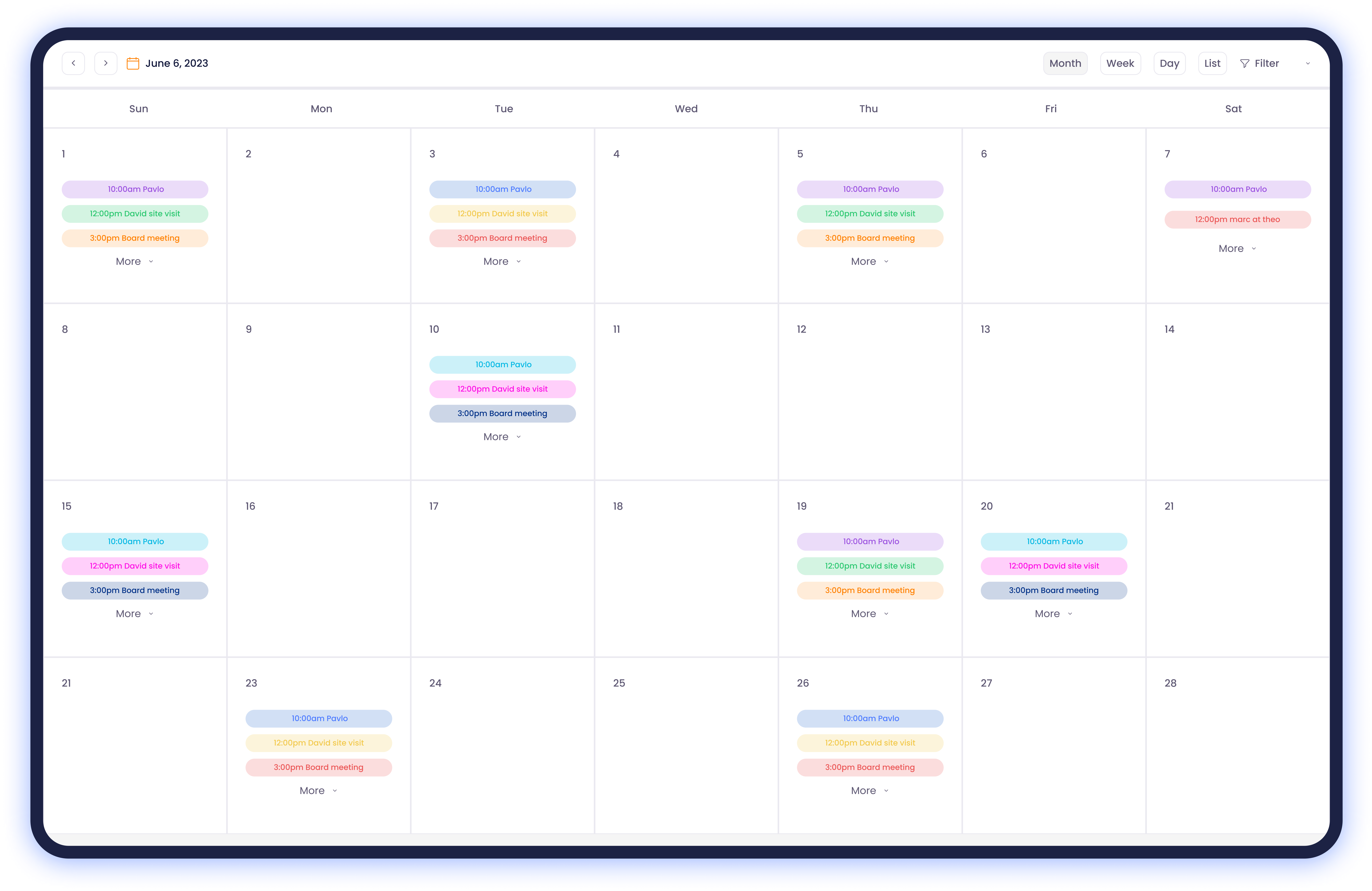
In the dynamic world of modern business, effective scheduling is a critical element of productivity and success. Whether you're a business professional juggling multiple meetings, a project manager coordinating team schedules, or an entrepreneur trying to make the most of your time, the way you manage your calendar can significantly impact your efficiency and achievements. This is where integrated calendar management comes into play, revolutionizing the way businesses schedule and manage their time.
Understanding Integrated Calendar Management
Integrated calendar management is more than just a digital calendar. It's a comprehensive approach to scheduling that combines the convenience of traditional calendars with advanced features and seamless integration into your work ecosystem. At its core, it's about streamlining your scheduling processes and ensuring that your calendar isn't just a passive tool but an active assistant in managing your time.
Let's delve into the key benefits of integrated calendar management and why it's becoming indispensable for organizations and professionals of all kinds.
Efficiency and Time Savings
One of the primary advantages of integrated calendar management is the significant time savings it offers. With features like automatic scheduling and reminders, you can say goodbye to the tedious task of manually coordinating appointments and sending out reminders. These tools take care of the legwork, allowing you to focus on what matters most – your work.
Imagine receiving an email requesting a meeting. With integrated calendar management, you can simply check your availability and let the system propose suitable time slots based on your calendar. No more back-and-forth emails trying to find a suitable time. It's efficient, time-saving, and reduces the risk of double-booking.
Enhanced Collaboration
In today's interconnected business landscape, collaboration is key. Integrated calendar management systems facilitate collaboration by enabling the sharing of calendars with team members and external partners. This means that everyone involved in a project or a meeting can have access to the same schedule, making coordination a breeze.
Real-time updates ensure that changes are immediately reflected on shared calendars, reducing the chances of misunderstandings or missed appointments. Whether you're scheduling team meetings, client calls, or project deadlines, integrated calendars help keep everyone on the same page.
Minimizing Scheduling Conflicts
Scheduling conflicts can be frustrating and counterproductive. Integrated calendar management tools are designed to minimize these conflicts by offering features like availability checks and meeting suggestions. When you propose a meeting time, the system can automatically check the availability of all participants and propose alternative slots if needed.
This feature alone can save hours of back-and-forth emails and phone calls, making it easier to find mutually convenient meeting times, even when dealing with participants in different time zones.
Improved Productivity
A well-organized schedule directly contributes to increased productivity. Integrated calendar management tools provide insights into how you allocate your time, helping you identify and eliminate time-wasting activities. By analyzing your calendar data, you can make informed decisions about optimizing your daily routine, allocating more time to critical tasks, and avoiding overbooking.
Personalization and Customization
Integrated calendars allow for a high degree of personalization and customization. You can tailor your calendar to your preferences, color-code events, categorize tasks, and set up different calendars for work, personal life, or specific projects. This flexibility ensures that your calendar works for you, aligning with your unique needs and work style.
Accessibility and Mobility
The ability to access your calendar from various devices, including smartphones, tablets, and computers, is a fundamental feature of integrated calendar management. Cloud-based solutions ensure that your calendar is always in sync, regardless of the device you're using. This mobility ensures that you can stay organized and on top of your schedule, whether you're at your desk or on the go.
Integration with Other Tools
Integrated calendar management doesn't exist in isolation. These tools seamlessly integrate with other essential software, such as email clients, project management platforms, and communication tools. For example, you can link your calendar to your email, allowing you to create events directly from your messages or receive event invitations that integrate seamlessly into your schedule.
Popular integrations include Google Calendar, Microsoft Outlook, and Apple Calendar, which can work harmoniously with a wide range of business applications.
Security and Data Protection
Data security and privacy are paramount when it comes to calendar management. Reputable integrated calendar management solutions prioritize the protection of your data through encryption, authentication measures, and access controls. Your sensitive information remains confidential and secure.
Real-World Use Cases
To illustrate the tangible benefits of integrated calendar management, let's explore a few real-world scenarios:
Project Management: A project manager uses integrated calendar management to coordinate team meetings, track project milestones, and ensure that deadlines are met. Real-time updates and shared calendars keep the entire project team informed and aligned.
Sales and Client Management: A sales professional relies on integrated calendar management to schedule client meetings, demos, and follow-up calls. Reminders and notifications ensure that no client communication falls through the cracks.
Entrepreneurship: An entrepreneur uses an integrated calendar to balance business meetings, networking events, and personal appointments. The ability to access the calendar from a smartphone means they can manage their schedule on the go.
In conclusion, integrated calendar management is transforming the way businesses and professionals schedule and manage their time. With efficiency, collaboration, and customization at its core, it's a valuable tool for boosting productivity and staying organized in our fast-paced digital world. Whether you're a business leader, project manager, or a professional aiming to make the most of your time, integrated calendar management is a revolution you won't want to miss.
In the fast-paced world of modern business, the creation and management of documents play a pivotal role. Whether it's drafting proposals, generating reports, finalizing contracts, or developing marketing materials, businesses of all sizes rely heavily on document creation. In this digital age, the efficiency and effectiveness of document creation have become critical factors in maintaining a competitive edge. This is where unified document creation tools come into play, revolutionizing the way businesses handle their document-related tasks.
Understanding Unified Document Creation
Unified document creation refers to the use of specialized software and tools designed to streamline the document creation process. Unlike traditional methods that involve separate software for word processing, spreadsheets, and presentations, unified document creation tools integrate these functions into a single platform. The result is a seamless workflow that enhances productivity, collaboration, and efficiency.
Streamlining Workflows with Unified Document Creation
One of the primary advantages of unified document creation is its ability to manage, simplify and automate the document creation process. These tools offer a wide range of features that expedite tasks, such as the creation of templates, real-time collaboration, and automated formatting. For example, teams can work on the same document simultaneously, providing instant feedback and updates. This eliminates the need for back-and-forth email exchanges and ensures that everyone is on the same page.
Enhancing Business Efficiency
Unified document creation contributes significantly to overall business efficiency. Here's how:
Time-Saving Benefits: With the ability to create templates and automate repetitive tasks, employees can save valuable time that can be redirected toward more strategic activities.
Integration: Many unified document creation tools seamlessly integrate with other business applications, such as customer relationship management (CRM) systems and project management software. This integration ensures data consistency and reduces the need for manual data entry.
Version Control: These tools offer robust version control features, preventing confusion over which version of a document is the most current. This enhances collaboration and minimizes errors.
Improved Accessibility: Documents created with unified tools are often stored in the cloud, making them accessible from anywhere with an internet connection. This flexibility allows employees to work remotely and access documents on the go.
Ensuring Consistency and Compliance
Consistency in branding, content, and compliance with regulations is vital for businesses across industries. Unified document creation tools help maintain brand consistency by offering templates, style guides, and standardized formatting. Moreover, they assist in ensuring compliance by incorporating industry-specific templates and automating compliance checks. This not only reduces the risk of errors but also enhances the professionalism and credibility of the documents.
Scalability and Future-Readiness
As businesses grow and evolve, their document creation needs change. Unified document creation tools are designed to scale with a growing business. They can adapt to changing business requirements and emerging technology trends. Investing in such tools is an investment in long-term efficiency and adaptability.
Conclusion
In today's competitive business landscape, streamlining document creation processes is no longer a choice but a necessity. Unified document creation tools offer businesses a way to enhance efficiency, collaboration, and compliance while staying adaptable to future needs. By adopting these tools, businesses can unlock their full potential, saving time, reducing costs, and ensuring the consistency and quality of their documents. It's time to embrace the future of document creation and elevate your business to new heights of operational efficiency and success.
In the ever-evolving landscape of modern business, managing finances efficiently is paramount to success. One crucial aspect of financial management that can significantly impact a company's bottom line is invoicing. Integrated invoicing systems have emerged as a game-changer, offering a key to faster payments and better cash flow management.
Importance of Integrated Invoicing
Integrated invoicing is the practice of seamlessly incorporating invoicing processes into your overall business management system. It goes beyond creating invoices; it encompasses the entire invoicing lifecycle, from generation and delivery to tracking and payment reconciliation. This holistic approach to invoicing brings several advantages:
Streamlining Invoicing Processes
Integrated invoicing systems streamline the invoicing process by automating repetitive tasks. From generating invoices to sending reminders for overdue payments, these systems reduce manual intervention, minimizing errors, and saving valuable time.
Automation and Efficiency
Automation is at the core of integrated invoicing. Businesses can set up automated invoicing schedules, ensuring that invoices are sent promptly and consistently. Automated payment reminders can help clients remember their dues, further improving efficiency.
Real-time Tracking and Monitoring
One of the most significant benefits of integrated invoicing is real-time tracking. Businesses can monitor the status of their invoices, knowing when they are delivered, viewed, and paid. This level of transparency empowers better decision-making and ensures that no payment falls through the cracks.
Improved Client Relationships
Effective communication is key to maintaining strong client relationships. Integrated invoicing systems facilitate communication by sending invoices and reminders electronically. Clients appreciate the convenience and professionalism, leading to better rapport.
Enhanced Cash Flow Management
Cash flow is the lifeblood of any business. Integrated invoicing plays a pivotal role in managing cash flow effectively. By gaining insights into expected payments and eliminating delays, businesses can optimize their cash flow, making it more predictable and stable.
Challenges and Solutions
While integrated invoicing offers numerous benefits, businesses may encounter challenges during implementation. Common issues include data migration, training staff, and selecting the right software. However, these challenges can be overcome with proper planning, training, and selecting the most suitable software for your business needs.
Future Trends
The landscape of integrated invoicing is continually evolving. Future trends include enhanced artificial intelligence for smarter invoicing, blockchain for enhanced security and transparency, and mobile-first invoicing solutions for greater accessibility.
Conclusion
Integrated invoicing systems have become an indispensable tool for businesses looking to optimize their financial processes. From streamlining operations and improving efficiency to enhancing client relationships and cash flow management, the benefits are undeniable. As the business world continues to evolve, embracing integrated invoicing is a strategic move that can set your company on the path to financial success.