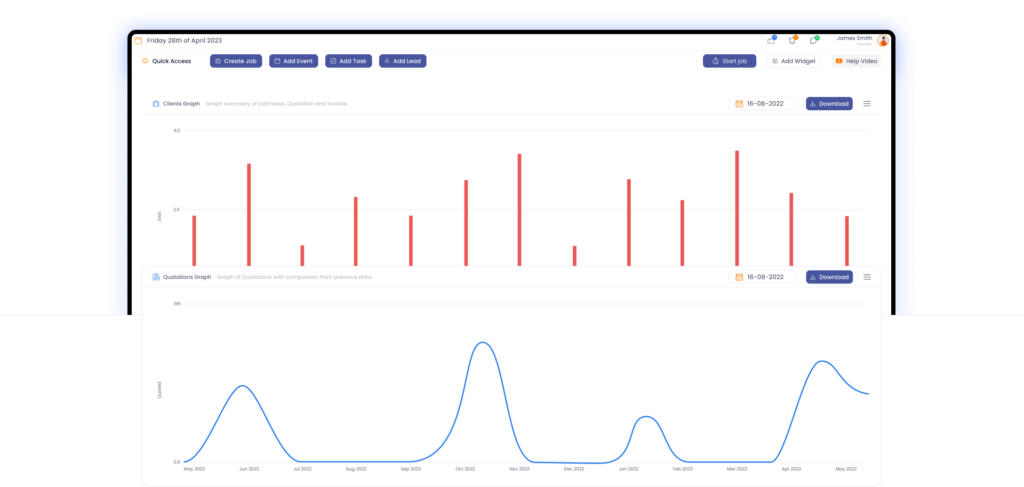
Poor operational control erodes margins faster than a bad contract. Projects overrun, invoices are delayed, labour and materials costs drift, and simple visibility gaps turn manageable problems into financial risk. If your team cannot see real-time job status and costs, you cannot act quickly enough to protect profit.
Across hundreds of demonstrations with growing service businesses, we consistently see the same root causes: fragmented data, manual processes and a lack of connected workflows. Connected workflows create operational visibility — without that, forecasts are assumptions, not plans.
## Four operational best practices to protect profitability
Below are the pragmatic controls that separate businesses that stabilise margins from those that chronically underperform.
### 1. Make one source of truth non-negotiable
Problem: Estimates, purchase orders and timesheets live in different systems or spreadsheets, so actual cost per job is always stale.
Action:
- Consolidate job records into a single system that links estimate, timesheet, purchase order and invoice.
- Enforce one point of entry for changes so reports reflect reality, not guesswork.
Outcome: You get true cost-to-complete, not a rear-view estimation.
### 2. Standardise work and automate handoffs
Problem: Variability in processes creates rework and hidden labour costs.
Action:
- Define standard workflows for common job types and use checklists or templates.
- Automate the handoff between office and field so information doesn’t rely on memory or paper.
Outcome: Fewer mistakes, predictable labour usage, and faster invoicing.
### 3. Capture job costing in real time
Problem: Weekly or monthly job reviews come too late to influence outcomes.
Action:
- Require real-time recording of labour, materials and subcontractor expenditure against each job.
- Use mobile tools for field staff to log time and materials as they happen.
Outcome: Early warnings on margin erosion and the ability to reprice or reallocate resources while there’s still time.
### 4. Make cashflow management process-driven
Problem: Late invoices and inconsistent terms create avoidable cash shortfalls.
Action:
- Standardise billing schedules and link them to job milestones.
- Automate invoice generation and follow-up with clear ageing reports and responsibilities.
Outcome: Predictable inflows and better control of working capital.
## What to measure — and act on — daily
Focus on a short list of leading indicators that tell you where action is needed now:
- Jobs at risk (by variance to estimated margin)
- Actual hours vs scheduled hours (per crew)
- Materials committed but not invoiced
- Invoice ageing and days sales outstanding (DSO)
Monitor these in a dashboard that refreshes automatically, not a spreadsheet you update every Friday.
## People and governance: rules that stick
Processes fail when accountability is fuzzy.
- Assign clear ownership for each job phase: estimating, execution, procurement, invoicing.
- Use escalation rules so out-of-tolerance jobs surface to management immediately.
- Train teams on disciplined data entry — accurate inputs are mandatory for accurate outputs.
## Implementing technology without friction
Choose solutions that reflect your operational reality and avoid systems that add steps or duplicate effort. To evaluate platforms against the practices above, read https://www.cq-business-management-software.com/how-to-choose-job-management-software/ for a practical approach to vendor selection and fit.
If you want to see how connected data reduces administrative work and enforces the controls above, view the product overview at https://www.cq-business-management-software.com/ to confirm the capabilities you need.
To assess fit for your team, book a demonstration and watch workflows executed end-to-end at https://www.cq-business-management-software.com/landscaping-demo/.
## Final steps — convert insight into protection
Operational health is not a one-off project. Treat it as a continuous improvement cycle:
- Standardise → Automate → Measure → Improve.
Start by fixing your single biggest visibility gap, then extend the same discipline across jobs. The controls above are practical: they reduce surprises, protect margins and free management to focus on growth rather than firefighting.
If your team is struggling to see current job costs and cash position, implement these practices now. Connected workflows create operational visibility — and operational visibility is the foundation of reliable profitability.
In today's fast-paced digital world, service-based businesses face the constant challenge of delivering consistent, high-quality services to their clients. With rising customer expectations and the ever-evolving landscape of service delivery, businesses are in dire need of efficient tools to optimize their processes. Enter CQ, a platform designed to address these challenges and revolutionize the way businesses operate.
The Modern Service Delivery Landscape
The digital age has brought about a shift in customer expectations. Clients today demand faster responses, transparent processes, and top-notch services. This has put immense pressure on businesses to up their game and ensure they are not only meeting but exceeding these expectations. Traditional service delivery models, with their inherent bottlenecks and inefficiencies, are no longer viable in this competitive market.
CQ's Comprehensive Suite of Tools
CQ offers a holistic platform equipped with a range of multifunctional capabilities tailored for service-based businesses. From real-time analytics that provide insights into operations to automated workflows that ensure seamless processes, CQ has it all. One of its standout features is the integrated communication tools, which foster collaboration among teams, ensuring that everyone is on the same page. Moreover, the platform's user-friendly interface and customization options make it a favorite among businesses.
Benefits of Using CQ for Service Delivery
Businesses that have integrated CQ into their operations have reported a myriad of benefits. Faster response times mean that clients no longer have to wait for extended periods, leading to increased customer satisfaction. The platform's emphasis on communication ensures fewer errors, reducing the need for rework and saving both time and money. Additionally, the consistent and reliable service delivery powered by CQ enhances the overall customer experience. With the added advantage of data-driven decision-making capabilities, businesses can make informed choices, further optimizing their processes.
Case Studies/Success Stories
Several businesses have reaped the benefits of integratingCQ into their service delivery processes. For instance, a renowned IT service provider reported a 30% increase in client satisfaction after adopting CQ. They attributed this to the platform's efficient workflows and communication tools, which drastically reduced service delivery times. Another success story comes from a financial consultancy firm that saw a 25% increase in operational efficiency post-CQ integration, thanks to the platform's real-time analytics and data-driven insights.
Staying Ahead of the Curve with CQ
In a market that's constantly evolving, CQ ensures that businesses always stay ahead of the curve. The platform is continuously updated to cater to changing business needs, ensuring that clients always have access to the latest tools and features. Moreover, its scalability ensures that it's a perfect fit for businesses, whether they're startups or established enterprises.
Conclusion In conclusion, streamlined service delivery is no longer a luxury but a necessity in today's competitive market. With platforms like CQ, businesses have the perfect ally to ensure they are always at the top of their game. If you're a business looking to optimize your service delivery and stay ahead of the competition, CQ is the way to go.
In today's fast-paced digital landscape, communication has evolved into an intricate dance between businesses and their clients. The advent of digital transformation has fundamentally changed the way companies interact with their customers. In this article, we will delve into the importance of client communication in the digital age and the critical role that transparency plays in building trust and lasting relationships.
The Digital Transformation Revolution
The digital transformation journey has touched virtually every industry, from retail and healthcare to manufacturing and financial services. One of the most profound changes has been the way businesses communicate with their clients. Traditional methods, such as face-to-face meetings and phone calls, have been supplemented, and in some cases supplanted, by digital tools and platforms.
Why Effective Client Communication Matters
Effective client communication is the bedrock of a successful business-client relationship. It goes beyond merely conveying information; it's about building trust, enhancing client satisfaction, and creating advocates for your brand. In the digital age, where information is abundant and choices are plenty, maintaining a strong connection with clients is essential for retaining their loyalty.
The Role of Transparency in Client Communication
Transparency is a key component of effective client communication. It means being open, honest, and forthright in your interactions with clients. When clients feel that a business is transparent, they are more likely to trust the information they receive. Transparency also fosters a sense of partnership, as clients feel they are on the same page as the businesses they work with.
Digital Tools for Client Communication
The digital age has provided businesses with a wealth of tools and platforms for communicating with clients. Here are some of the most impactful ones:
Email: Email remains a primary means of communication, offering the ability to share detailed information and documents.
Video Conferencing: Platforms like Zoom and Microsoft Teams have become indispensable for face-to-face meetings, regardless of geographical distances.
Messaging Apps: Apps like WhatsApp and Slack facilitate quick, real-time communication, making it easy to keep clients in the loop.
Customer Relationship Management (CRM) Software: CRMs help businesses track and manage client interactions, ensuring that no conversation falls through the cracks.
Personalization and Customization
Personalization is about tailoring your communication to individual clients. It acknowledges that one size doesn't fit all. Personalized messages, recommendations, and solutions make clients feel valued and understood. It's about going the extra mile to provide a unique experience for each client.
Challenges and Solutions
While the digital age offers numerous benefits, it also presents challenges. Common challenges include information overload, misinterpretation of digital messages, and cybersecurity concerns. To address these challenges, businesses can invest in training to improve digital communication skills, utilize secure communication channels, and implement clear communication policies.
Future Trends in Client Communication
The landscape of client communication continues to evolve. Emerging trends include the integration of AI-driven chatbots for instant customer support, virtual reality meetings for immersive client interactions, and the impact of remote work on client relationships. Keeping an eye on these trends can help businesses stay ahead of the curve.
Tips for Effective Client Communication
To enhance your client communication strategies in the digital age:
Understand Your Clients: Take the time to understand your clients' needs, preferences, and communication style.
Use the Right Channels: Choose the communication channels that align with your clients' preferences and the nature of the message.
Invest in Training: Train your teams in effective digital communication, including email etiquette and video conferencing best practices.
Prioritize Security: Ensure the security of client data and sensitive information when communicating digitally.
Collect and Act on Feedback: Regularly seek feedback from clients and use it to improve your communication practices.
Conclusion
In the digital age, client communication is no longer a one-size-fits-all endeavor. It's about leveraging a plethora of digital tools, embracing transparency, and personalizing interactions to build lasting relationships. By staying connected and transparent, businesses can navigate the evolving landscape of client communication successfully.
In today's fast-paced business environment, data is often hailed as the new oil. But not just any data - real-time data. The ability to access and leverage real-time data has become a game-changer for organizations looking to make informed decisions swiftly. In this article, we will explore the significant benefits of real-time data in business decision-making.
Understanding Real-time Data
Before diving into the advantages, it's essential to grasp what real-time data means. Real-time data is information that is collected, processed, and made available instantly. It differs from traditional data sources, which might have a delay before the data becomes accessible. Real-time data can come from various sources, including IoT devices, sensors, social media, website analytics, and more.
Speed and Agility
One of the most significant advantages of real-time data is speed and agility in decision-making. In a rapidly changing business landscape, the ability to react swiftly to emerging trends, market shifts, or customer preferences can be a game-changer. For instance, an e-commerce company can adjust its marketing strategy in real-time based on customer behavior, leading to increased sales and customer satisfaction.
Improved Accuracy and Precision
Real-time data also enhances decision accuracy and precision. Traditional batch processing methods can introduce delays and inaccuracies, which can be costly. With real-time data, organizations can make decisions based on the freshest and most accurate information available. This leads to better planning, reduced errors, and improved outcomes.
Businesses that leverage real-time data can provide a superior customer experience. For example, a streaming service can recommend personalized content based on a user's viewing habits in real-time. Similarly, online retailers can offer tailored product recommendations as customers browse their websites. These personalized experiences not only drive customer satisfaction but also increase sales and customer loyalty.
Competitive Advantage
The use of real-time data can provide a competitive advantage. Organizations that can harness data for quick and precise decision-making outperform their competitors. For instance, a financial institution that uses real-time market data to make investment decisions can stay ahead of market trends and secure better returns for clients.
Cost Savings
Real-time data can lead to cost savings through better resource allocation and optimization. Manufacturers can use real-time data from sensors to predict machine failures and schedule maintenance proactively, reducing downtime and maintenance costs. Similarly, supply chain operations can optimize inventory levels, minimizing carrying costs and reducing waste.
Challenges and Considerations
While the benefits of real-time data are compelling, there are challenges to consider. Data security and privacy must be a top priority when handling sensitive information in real-time. Organizations must also invest in the necessary infrastructure and talent to collect, process, and analyze data rapidly.
Tools and Technologies
A variety of tools and technologies are available to help organizations harness real-time data. These include data analytics platforms, machine learning algorithms, and data visualization tools. Each of these tools has unique features and benefits, and the choice depends on specific business needs.
Conclusion
In conclusion, real-time data is a powerful asset for organizations looking to thrive in today's dynamic business landscape. The benefits, including speed, accuracy, enhanced customer experience, and cost savings, make real-time data an essential tool for informed decision-making. However, organizations must also address challenges and invest in the right tools and technologies to unlock the full potential of real-time data. Embracing real-time data can provide the competitive edge needed to succeed in a rapidly evolving business world.
In the traditional service business model, lead management is viewed strictly through the lens of sales. The objective is simple: capture the enquiry, pitch the service, and win the job. Once the quote is signed, the sales team's job is done, and the project is thrown over the fence to the operations team to deliver.
This mindset is one of the most common barriers to scalable growth.
When lead management is treated purely as a sales activity, the focus is entirely on revenue generation, often at the expense of profitability and deliverability. To build a mature, scalable business, leadership must shift their perspective: lead management is the first step in an operational process.
This approach prevents the revenue leakage that plagues disconnected businesses.
The Problem with Disconnected Systems
When sales operates in a vacuum, disconnected from the realities of delivery, the business suffers.
Sales teams using standalone CRMs or spreadsheets are incentivised to win work, regardless of whether that work is a good fit for the business's current capacity or historical profit margins. They might promise aggressive timelines without visibility into the scheduling board. They might agree to custom requests without consulting the estimation team on the true cost of delivery.
This disconnected approach creates a chaotic operational environment. The delivery team receives projects with unrealistic expectations, incomplete information, and razor-thin margins. The business might be generating high revenue, but the lack of a single source of truth means that profitability is constantly eroding.
The CQ Connected Workflow
To achieve operational maturity, a business must integrate its front-end sales with its back-end delivery. Connected workflows create operational visibility, ensuring that the process of winning work is perfectly aligned with the process of delivering it.
In a truly integrated system, the CRM is just the starting point of a single connected record. When a quote is built using live supplier pricing and approved by the client, it converts into a live job with one action. The intended profit from the quote is locked in as the financial target, allowing the business to track actual costs against intended profit in real time as the job is delivered.
The Impact on the Business
Treating lead management as an operational process fundamentally changes the quality of the work a business takes on.
It allows leadership to make better decisions based on data, rather than gut feeling. You can analyse which lead sources generate the most profitable projects, not just the highest volume of enquiries. You can identify which types of work consistently cause operational bottlenecks and adjust your sales strategy accordingly.
This alignment between sales and operations is the hallmark of a mature service business. It ensures that revenue growth translates directly into profit growth, creating a stable foundation for long-term success.
Conclusion
Winning a job is only valuable if the business can deliver it profitably and efficiently. When lead management is isolated from operations, it creates friction, miscommunication, and margin erosion. By adopting a connected workflow, service businesses can ensure that their sales efforts are perfectly aligned with their operational capacity, driving sustainable, profitable growth.
If you're evaluating ways to improve lead management and customer workflows, explore our CRM & Sales Operations resources or book a personalised demo to see how CQ connects sales, delivery and finance in a single workflow.
## Tackling the Hidden Costs in Construction Operations
Hidden costs silently erode margins. They show up as overtime that wasn’t planned, materials ordered twice, teams waiting on the right drawings, and invoices that sit unpaid because field time wasn’t recorded correctly. Left unchecked, these small leaks compound into major profitability problems.
This article explains where those costs appear, why they persist, and practical steps your team can take to stop the leakage now.
### Where hidden costs crop up
- Inefficient scheduling: crews travel between sites without optimal routing, increasing fuel, plant wear and lost productive hours.
- Poor job visibility: office staff and site teams operate from different information sets, causing rework and miscommunication.
- Manual timesheets and paperwork: delays in time capture lead to missed billing, under-recovery of labour and incorrect cost allocation.
- Materials waste and misordering: lack of on-site stock visibility encourages over-ordering or emergency purchases at premium prices.
- Subcontractor coordination: missed handovers and unclear scopes create downtime and claims.
- Billing leakage: work is completed but not billed promptly, impacting cashflow and margin realisation.
### Why these costs persist
Most hidden costs are organisational, not technical. They persist because processes are fragmented, data is siloed, and accountability is unclear.
Across hundreds of demonstrations with growing service businesses, we consistently see the same root causes:
- Teams using multiple unconnected tools that create duplication.
- Decisions made on gut feeling rather than current job-level data.
- No single source of truth for job status, costs and profitability.
These are operational problems with straightforward remedies — if you prioritise putting connected processes in place.
### What fixes actually reduce hidden costs
Connected workflows create operational visibility — that is not just a slogan, it’s the practical mechanism that stops leakage. When the schedule, job costs, timesheets, plant records and invoicing are connected, you get:
- Real-time job cost tracking so overruns are flagged immediately.
- Accurate, timely invoicing because field time is recorded and flowed into billing without rekeying.
- Fewer duplicate materials orders through stock visibility and purchase controls.
- Better use of plant through centralised allocation and utilisation reporting.
- Clear accountability and audit trails for subcontractor performance and payments.
A platform that centralises these functions removes friction between office and site. If you want to understand how a single system can replace fragmented tools, visit https://www.cq-business-management-software.com/ for an overview of the capabilities you should expect.
### Practical steps to take this week
1. Map the information flow on one representative job. Identify where data is re-entered or lost.
2. Enforce digital time capture on site and ensure timesheets feed directly into job costing.
3. Standardise job packs so every team has the same drawings, scope and materials list.
4. Introduce a daily job-status update that is shared between field and office.
5. Trial a job-management tool on a small set of projects and measure time saved, reduction in duplicate purchases, and time-to-invoice.
If you want to see how those actions look in practice, book a live demonstration at https://www.cq-business-management-software.com/landscaping-demo/ to watch job lifecycle workflows in real time.
### How to choose a solution that eliminates leakage
Not every system delivers on the promise of reduced costs. Focus on solutions that:
- Centralise scheduling, timesheets, costs and invoicing.
- Provide mobile access for site teams.
- Integrate with your accounts package to remove duplicate entry.
- Deliver job-level profitability reporting, not just high-level P&L.
For a checklist and selection guidance, read our practical guide on how to choose job management software at https://www.cq-business-management-software.com/how-to-choose-job-management-software/.
### Final point
Hidden costs are repairable. Start by creating single-source job visibility, enforce digital capture of time and materials, and standardise handovers. In our experience working with service businesses, teams that implement connected workflows reduce admin time, cut material waste and recover lost margin within months. If you want to stop margin erosion, measure one job before and after you change a single process — then scale what works.
## Gantt charts and the operational gap
Gantt charts are excellent at one thing: turning plan into timeline. They make dependencies, critical paths and delivery dates easy to visualise. But a Gantt alone doesn't manage the day-to-day: it doesn't assign work at the person level, capture labour data, or trigger the business processes that keep projects cash-positive.
One common pattern we see across growing service businesses is the same pattern: teams plan in Gantt, then struggle to operate from that plan. Tasks get missed, estimates drift, and finance teams chase milestone billing because the plan and the operational workflow are not connected.
This is the problem CQ addresses: keep the planning power of the Gantt and connect it to the operational backbone your team needs.
## Where Gantt charts excel
Gantt charts remain a crucial planning tool because they:
- Show sequence and dependencies, so you can spot bottlenecks early.
- Communicate timelines to stakeholders and clients.
- Help teams scope the project and forecast resource needs.
- Provide a single, visual place to align on delivery dates.
They are not the issue. The issue is treating them as the whole system.
## The operational requirements growing service businesses need
Planning is step one. Delivery requires a different set of capabilities:
- Task-level assignment and clear ownership.
- Mobile-friendly task lists for field teams.
- Time capture and materials logging against tasks.
- Automated milestone billing and links to accounts receivable.
- Real-time visibility for project managers and finance.
Without those capabilities, your team re-enters the plan manually, creates duplicate records, or relies on spreadsheets — all of which erode delivery certainty and cashflow.
## How CQ complements a Gantt chart
CQ is designed to sit alongside your planning tools, not replace them. The idea is simple: keep the Gantt for high-level planning and use CQ to execute against it.
When you create something in the Gantt it automatically generates the tasks for you — and as a bonus, milestone payments can be fired from it too.
That single behaviour solves several problems at once:
- No double entry: planners work in the Gantt and operations get an accurate, task-level backlog.
- Faster mobilisation: teams on the ground see their work appear in their task lists immediately.
- Billing discipline: when a milestone is reached in the plan, the system can trigger the corresponding payment event so finance can raise invoices on time.
More specifically, integrating Gantt planning with CQ gives you:
- Task creation and assignment in one flow: convert Gantt bars to task groups, then allocate to teams or individuals.
- Field-ready job packs: tasks include checklists, attachments and safety notes, delivered to mobile devices.
- Labour and materials capture: timesheets and job costs feed back into the project record without manual reconciliation.
- Financial triggers: milestone completion can flag invoice creation or release staged payments to accounts.
These are not theoretical benefits. In our experience working with service firms, firms that link planning and operations reduce delivery variance and improve cash collection times consistently.
## Example workflow
Here is a typical end-to-end flow showing how Gantt + CQ works in practice:
1. Planner builds the project timeline in the Gantt and sets milestones.
2. Planner converts phases or bars into task groups within CQ.
3. Tasks are auto-created and assigned to crews, subcontractors or individuals.
4. Field teams complete tasks, capture time and materials on mobile, and upload photos or checklists.
5. When a milestone is reached, the system flags the milestone and can fire a payment event to finance.
6. Project managers see live progress against the Gantt, and finance sees invoices linked to delivery events.
This flow keeps the strategic view (Gantt) and the execution layer (CQ) synchronised, eliminating the common hand-off failure between planning and delivery.
## Benefits by role
- Project managers: see real-time progress against plan and avoid last-minute surprises.
- Site teams: receive clear, actionable task lists on mobile and stop relying on paper or group chat.
- Finance teams: get milestone-linked billing and fewer disputes over what was delivered and when.
- Operations leaders: access capacity, utilisation and delivery KPIs without manual consolidation.
## Getting started with a connected approach
If you want to understand how project management and operational execution can sit together, read our project management page: https://www.cq-business-management-software.com/project-management-software/ for an overview of how the pieces fit.
If you’d like to see the flow in action, we have a focussed demonstration that shows Gantt-driven task creation and milestone billing in context: https://www.cq-business-management-software.com/landscaping-demo/.
If you’re still deciding how to choose the right system for your team, our guide lays out the practical criteria to evaluate job management software: https://www.cq-business-management-software.com/how-to-choose-job-management-software/.
## Common objections addressed
- “We already have a Gantt — why add another system?”
Because planning and operations are different disciplines. The Gantt gives you the timeline; an operational system turns that timeline into day-to-day work, cost capture and billing. The two together reduce rework and billing delays.
- “Our teams won’t use it.”
Adoption comes from removing friction: automatic task creation from the Gantt removes manual entry. Field teams receive ready-to-use job packs, not extra admin.
- “Will this add more admin for project managers?”
On the contrary. Converting plan elements into operational tasks automates hand-offs and frees PMs from chasing status updates.
## Practical next steps
- Map your current hand-offs between planning and delivery and note delays or rework.
- Identify the milestone events that should drive billing or purchase approvals.
- Run a short pilot to convert a small set of Gantt phases into CQ tasks and measure time-to-first-complete and invoice timing.
The core point is simple: Gantt charts do what they do well, and a connected operational system completes the delivery cycle. When planning and execution are linked, you reduce wasted time, stop scope slippage and improve cashflow.
For teams that need both planning clarity and operational control, a connected approach is not optional — it’s essential.
In the world of construction, where complexity and collaboration reign supreme, communication is the linchpin that holds projects together. Effective communication isn't just a matter of convenience; it's the cornerstone of client satisfaction. In this article, we delve into the profound impact of clear and proactive communication on client relationships and project outcomes in the construction industry.
Understanding the Significance of Client Satisfaction
Client satisfaction is a measure of how well a construction project meets the expectations and needs of the client. It's more than a simple metric; it's a reflection of trust, quality, and professionalism. Satisfied clients are more likely to become repeat customers and advocates for your services. On the flip side, dissatisfied clients can tarnish your reputation and limit future opportunities.
The Communication Challenge in Construction
Construction projects are notorious for their complex web of stakeholders, technical details, and tight schedules. Managing this complexity requires effective communication. However, the construction industry faces unique communication challenges:
Diverse Stakeholders: Projects involve a multitude of stakeholders, from architects and engineers to contractors and subcontractors. Ensuring everyone is on the same page is no small feat.
Technical Information:Construction projects are laden with technical details that must be communicated accurately. Misunderstandings can lead to costly errors.
Transparency: Clients demand transparency in every aspect of the project. From budgets to timelines, they expect to be kept informed.
Clarity: Messages must be clear, concise, and easily understood. Ambiguity can lead to confusion and mistakes.
Timeliness: Information should be communicated in a timely manner. Delays in communication can result in project setbacks.
Relevance: Communication should be relevant to the recipient's needs and interests. Clients, for instance, need information that helps them make decisions.
Building Trust Through Communication
Trust is a fragile yet essential element in client relationships. Transparent and honest communication is the bedrock on which trust is built. When clients believe they're being kept in the loop and that their concerns are being addressed, trust flourishes.
Conversely, poor communication can erode trust. Delayed responses, unaddressed concerns, and lack of transparency can breed skepticism and dissatisfaction.
Proactive vs. Reactive Communication
Proactive communication involves anticipating issues and addressing them before they become problems. In construction, this might mean informing clients about potential delays or cost overruns and presenting solutions.
Reactive communication, on the other hand, occurs when issues are addressed after they've already caused disruptions. Clients generally prefer proactive communication, as it demonstrates foresight and commitment to their interests.
Client Expectations and Involvement
Client expectations regarding communication should be established at the project's outset. Some clients prefer frequent updates, while others may prefer less frequent but comprehensive reports. Understanding and meeting these preferences is essential.
Involving clients in key decisions, especially when changes or challenges arise, fosters a sense of ownership and control. It also ensures that the project aligns with their vision.
Communication Tools and Technologies
Modern construction benefits from a range of communication tools and technologies. Project management software, collaboration platforms, and mobile apps facilitate real-time communication. They provide a central hub for sharing documents, updates, and progress reports.
Overcoming Communication Barriers
Communication barriers can hinder effective interaction in construction projects. Language differences, technical jargon, and misaligned expectations are common hurdles. To overcome these barriers:
Use plain language when explaining technical concepts.
Provide translations or interpreters when necessary.
Ensure that all parties share a common understanding of project goals and objectives.
Client Feedback and Listening
Actively seeking client feedback and genuinely listening to their concerns are critical components of effective communication. Feedback loops allow construction teams to address issues promptly, make necessary adjustments, and demonstrate a commitment to improvement.
Challenges and Considerations
While effective communication is paramount, challenges can arise. Privacy concerns, regulatory compliance, and contractual obligations are among the considerations that construction professionals must navigate when communicating with clients.
The Connection Between Communication and Project Success
Beyond client satisfaction, effective communication plays a pivotal role in overall project success. It influences project timelines, budget adherence, and quality outcomes. By keeping everyone informed and aligned, construction teams can mitigate risks and optimize project performance.
Conclusion
In the construction industry, communication isn't just a means to an end; it's the glue that holds projects together and fosters client satisfaction. Transparent and proactive communication builds trust, aligns expectations, and ultimately ensures that clients walk away from a project not just satisfied but delighted.
In the age of digital transformation, business analytics has emerged as a cornerstone of decision-making. As we stand on the cusp of a new era, let's delve into the future trends of business analytics and how they promise to reshape the business landscape.
Introduction
From its humble beginnings as simple data collection to the sophisticated predictive models of today, business analytics has come a long way. In today's hyper-competitive market, data-driven decisions are not just a luxury but a necessity.
The Growing Importance of Real-time Analytics
The digital age is fast-paced. Decisions made today can become obsolete tomorrow. This has given rise to the need for real-time data. With real-time analytics, businesses can react to market changes instantaneously, gaining a significant competitive edge. For instance, a leading e-commerce platform recently leveraged real-time analytics to adjust its marketing strategies on the fly during a major sale, resulting in record-breaking revenue.
Integration of AI and Machine Learning in Business Analytics
Artificial Intelligence (AI) and Machine Learning (ML) are no longer just buzzwords. They are revolutionizing predictive analytics. From customer behavior prediction to inventory management, AI-driven insights are proving invaluable. However, with great power comes great responsibility. As we integrate AI deeper into analytics, ethical considerations, especially around data privacy, become paramount.
The Rise of Augmented Analytics
Enter augmented analytics – the next evolution in data analysis. By leveraging AI, augmented analytics simplifies data discovery, making it accessible even to non-experts. This democratization of data means that insights are no longer confined to the boardroom but can influence decisions at every organizational level.
Data Privacy and Security Concerns
With the increasing volume of data comes the challenge of keeping it secure. Regulations like GDPR and CCPA have put data privacy in the spotlight. For businesses, this means walking the tightrope between ensuring data accessibility for insights and maintaining stringent data security protocols.
The Role of Edge Computing in Business Analytics
The future of data processing lies at the edge. Edge computing, which involves processing data closer to its source, promises reduced latency and faster insights. For businesses, this could mean rethinking their data infrastructure investments.
The Future of Data Visualization
Data, in its raw form, can be overwhelming. Enter data visualization. With emerging technologies like Virtual Reality (VR) and Augmented Reality (AR), data visualization is set to become more immersive, making insights clearer and decisions more informed.
Conclusion: The future of business analytics is rife with possibilities. From real-time insights to AI-driven predictions, the next phase promises to be more dynamic and impactful. As we move forward, staying updated and embracing the latest in analytics technology will be the key for businesses to thrive and stay competitive. The world of business analytics is evolving rapidly. Don't be left behind. Explore the latest tools and technologies, and consider how they can revolutionize your business operations.
## The problem: growth breaks informal systems
As your business grows, the ad hoc ways you organised work stop scaling. Estimates live in spreadsheets, job notes are scattered across messages, and scheduling becomes a firefight. Those gaps create missed deadlines, cost overruns and frustrated teams.
Across hundreds of demonstrations with growing service businesses, we consistently see this pattern: what worked for a small team becomes the bottleneck for a larger one. That’s why effective project management matters not as a nice-to-have, but as an operational requirement.
### Common symptoms that show you need a change
- Projects rely on one or two people for knowledge transfer.
- Quoting, scheduling and invoicing are managed in different tools or paper systems.
- Field teams arrive under-equipped or with outdated instructions.
- Cashflow slips because billing is delayed or unreliable.
These symptoms are not isolated. They cascade. A single delayed invoice can push working capital into the red and force layoffs or stalled growth.
## What effective project management delivers
Good project management removes friction by creating predictable, repeatable processes. The outcomes you should expect are practical and measurable:
- Fewer schedule clashes and clearer resource allocation.
- Faster, more accurate quoting and reduced rework.
- On-time projects and improved customer retention.
- Faster invoicing and better cashflow.
Connected workflows create operational visibility. When teams share a single source of truth—quotes, job plans, field notes and invoices—managers see progress in real time and can course-correct before problems escalate.
## How to implement project management that scales
Start with the problems you want to solve, not the features you think you should buy.
1. Define the bottlenecks
- Identify where information slows down (estimates, approvals, scheduling).
- Measure the impact: how much time is lost, and what is the cost?
2. Centralise project data
- Move quotes, job files and communications into a single system to reduce duplication.
3. Standardise processes
- Create templates for common jobs and standard operating procedures for field teams.
4. Automate key handoffs
- Automate tasks like quoting approvals, scheduling and invoicing to remove manual steps.
5. Monitor and adapt
- Use dashboards and reports to identify trends and refine processes.
In our experience working with service firms, simple changes—like a standard job checklist and an automated invoice trigger—remove the most common causes of delay.
## Choosing the right tool is a risk decision, not a technology decision
A platform should help you enforce process and free your team from repetitive admin. Evaluate solutions on four operational criteria:
- Can it hold all project data in one place?
- Does it support mobile access for field teams?
- Will it automate common handoffs (quote → job → schedule → invoice)?
- Can you measure performance and cashflow in real time?
If you’re unsure where to start, our guidance on how to choose job management software walks through these criteria and the practical trade-offs to consider: https://www.cq-business-management-software.com/how-to-choose-job-management-software/
## See how it changes daily operations
If you want to see a real workflow for outdoor projects and how it removes double-entry and delays, explore the tailored demo at https://www.cq-business-management-software.com/landscaping-demo/. Seeing a workflow in action makes the gaps obvious.
For a broader view of the platform and how it supports end-to-end project delivery, visit https://www.cq-business-management-software.com/ for product details and case examples.
## A final, practical note
Project management isn’t a project in itself—it’s an operating model. Start with one process you can standardise, measure the improvement, then scale the change across other processes.
We consistently see that businesses which centralise project data, standardise work and automate predictable handoffs reduce admin time, improve margins and regain control of growth. If your team still relies on spreadsheets, fragmented comms and manual billing, you will encounter the same limits at scale. Address them now, before growth exposes the full cost.
## The problem: a persistent gap between finance and operations
Service businesses struggle when finance and operations operate as separate silos. The symptoms are familiar: late invoicing, unexplained margin erosion, reactive scheduling, and forecasts that never match reality. These aren’t just process problems — they’re profit leaks.
Across hundreds of demonstrations with growing service businesses, we consistently see that data gaps and manual handoffs cause the same failures: inaccurate job costing, delayed cash collection, and poor visibility into workforce capacity.
## Why the relationship matters
When finance lacks timely, accurate operational data it cannot:
- Price work correctly or adjust bids to protect margins.
- Forecast cashflow or plan labour ahead of seasonal demand.
- Identify underperforming teams or inefficient processes.
Operations, meanwhile, needs financial input to:
- Understand the real cost impact of overtime, materials and travel.
- Prioritise jobs that maintain margin targets rather than simply maximising utilisation.
- Make trade-offs between speed and profitability.
This is not hypothetical. Teams that reconcile time, materials and costs in a single process reduce disputes, shorten invoicing cycles, and make scheduling decisions that protect margin.
## Practical steps to align finance and operations
Start with small, high-impact changes that stop profit bleeding:
- Capture costs at source: mobile timesheets, materials scanning and job-level expenses reduce estimation errors.
- Automate the handoff from schedule to invoice: when work is completed, the invoice should be generated with the exact hours and materials recorded on-site.
- Reconcile actuals to estimates daily: flag jobs that move outside margin tolerance so corrective action happens while the job is still active.
- Use role-specific dashboards: operations see capacity and job progress; finance sees committed revenue, outstanding invoices and margin variance.
- Standardise job costing rules: consistent labour rates, overhead allocation and material costing eliminate one-off calculations.
These changes reduce rework, decrease late payments, and make forecasting usable. They also change behaviours: when the team knows that time and materials feed directly into margin reports, recording that information becomes a priority rather than an afterthought.
## What to look for in software
Software should enforce the workflow rather than rely on manual reconciliation. Look for systems that:
- Connect schedules, timesheets, purchasing and invoicing with a single source of truth.
- Provide live margin reporting at job and portfolio level.
- Support mobile capture for field staff and simple approvals for managers.
- Integrate cleanly with your accounting package to avoid duplicate entry.
If you need a practical guide to evaluate options, our article on how to choose job management software explains the essential criteria and trade-offs to consider: https://www.cq-business-management-software.com/how-to-choose-job-management-software/.
## Where to begin
Start by assessing the single biggest friction point between your teams — scheduling accuracy, job costing, or invoicing lag — and pick a solution that addresses that gap end-to-end.
You can explore the platform and its core capabilities at https://www.cq-business-management-software.com/. To understand how field workflows map to office processes, view a demo tailored to real-world field teams at https://www.cq-business-management-software.com/landscaping-demo/.
## Quick checklist to restore alignment
- Map the current flow of job data from quote to invoice.
- Identify where manual handoffs occur and how long they take.
- Define one or two KPIs (cash collection days, margin variance) to improve in 90 days.
- Trial a solution that enforces the workflow and measures impact.
Service businesses that close the loop between operations and finance stop reacting to surprises and start managing predictable profitability. Take a focused, practical step today: understand your single biggest data disconnect, pick a tool that removes it, and measure the outcome.
In the dynamic world of the construction industry, financial management stands as a pillar of success. Traditionally, businesses have relied on broad profit and loss statements to gauge their financial health. However, as the industry evolves, there's a growing need for a more granular approach: job-by-job profit and loss analysis.
Why Job-by-Job Analysis Matters
The construction industry is characterized by multiple projects running simultaneously, each with its own set of financial intricacies. Here's why analyzing them individually is crucial:
Detailed Insight: By breaking down the profitability of each job, businesses can pinpoint which projects are cash cows and which might be resource hogs. This insight is invaluable for future project selection and resource allocation.
Resource Allocation: When you know the profitability of each job, you can allocate resources—be it manpower, materials, or machinery—more judiciously. This ensures that profitable jobs get the attention they deserve, leading to optimized returns.
Pricing Strategy: Past performance informs future decisions. By understanding the financial outcomes of previous jobs, businesses can set more accurate prices for future projects, ensuring profitability.
Risk Management: Not all jobs are created equal. Some might consistently underperform due to various reasons—be it unforeseen site challenges, client-related delays, or resource mismanagement. Identifying these patterns early can help businesses mitigate risks.
Components of Job-by-Job Profit and Loss Analysis
To effectively analyze profit and loss on a job-by-job basis, it's essential to understand its components:
Direct Costs: These are the costs directly attributable to a job. It includes expenses like materials, labor, equipment rentals, and subcontractor fees.
Indirect Costs: These are the overhead costs that are spread across jobs, such as administrative salaries, office rent, and utilities.
Revenue: This is the payment received from the client for a particular job.
Gross Profit: Calculated by subtracting direct costs from revenue, it gives an initial idea of the job's profitability.
Net Profit: This is the final profit figure, obtained by subtracting indirect costs from the gross profit. It provides a clear picture of how much a particular job contributes to the bottom line.
Tools and Techniques
The digital age has ushered in a plethora of software solutions tailored for the construction industry. These tools offer real-time data, making job-by-job profit and loss analysis more accurate and efficient. Integrated systems, which combine various aspects of a construction business, provide comprehensive financial data at the click of a button. The benefits of these digital tools far outweigh traditional manual methods, offering more accuracy, speed, and clarity.
Case Study: Building Profits Brick by Brick
XYZ Construction, a mid-sized construction company, always prided itself on delivering quality projects. However, despite their best efforts, their bottom line wasn't reflecting their hard work. They decided to implement a job-by-job profit and loss analysis. The results were eye-opening. They discovered that while some jobs were highly profitable, others were consistently running over budget. By identifying these patterns, XYZ Construction was able to make informed decisions, allocate resources more efficiently, and improve their overall profitability.
Conclusion
In today's competitive construction landscape, businesses need every advantage they can get. Job-by-job profit and loss analysis offers a clear, detailed view of a company's financial health, allowing for better decision-making, optimized resource allocation, and improved profitability.
If you're still relying on broad profit and loss statements, it's time to delve deeper. Embrace the power of job-by-job analysis and watch your construction business thrive.